
BG ULTIMATE
The travel division of BG FINANCES
Background dossier · August 2026
Two biological continents touch one another without ever having met. Seven hundred and eighteen languages. The richest reservoir of coral on earth. And almost none of it can be reached except under sail.



The starting point
And even that ratio understates the case: the Balinese figure counts only direct arrivals through Denpasar airport and the island’s ports. A traveller who lands in Jakarta and continues on to Bali does not appear in it.
The same imbalance is visible in the press. A survey of Indonesian coverage across major international travel titles yields, over the last twenty articles: the beaches of Bali, the resorts and restaurants of Bali, the best time to visit Bali, the hotels of Lombok, the addresses of Canggu, the lesser-known side of Bali. Then Jakarta and Yogyakarta. And for the whole of eastern Indonesia — that is to say four-fifths of the country — NOTHING: a single substantial article in three years, one sailing narrative from Komodo National Park, and a passing mention of Raja Ampat in a list of seven wonders off the beaten track.
This is not a criticism of the press; it is a market observation: the Indonesia that is described and the Indonesia that exists barely overlap. And the distance between the two is not crossed by plane.
A point of method that holds for this entire dossier: the figure of “17,508 islands” repeated by most brochures and by the World Factbook dates from the 1990s. The current official count is 17,380, and it shifts each year, because the definition of an island under the law of the sea excludes anything submerged at high water. We would rather quote the exact figure than the spectacular one.
The fundamental singularity
To the west: tigers, rhinoceroses, elephants, primates — a fauna of Asian affinity. To the east: marsupials, cockatoos, birds of paradise — a fauna of Australian affinity. No feature of the landscape marks the boundary. Nothing at the surface suggests that one has just crossed into another biological continent.
Alfred Russel Wallace, the British naturalist, identified this rupture between 1859 and 1863, over eight years of collecting across the archipelago. His observations would lead him to formulate, independently of Darwin, a theory of natural selection — and to send Darwin the manuscript that precipitated the publication of On the Origin of Species. The theory of evolution was born, half of it, in these Indonesian islands.
The explanation lies in depth. The Lombok Strait is narrow but deep: during the great glacial falls in sea level, when Java, Sumatra and Borneo formed a single landmass attached to Asia, and New Guinea was welded to Australia, that strait never closed. Land species could not cross it. Two parallel evolutions continued within sight of one another for millions of years.
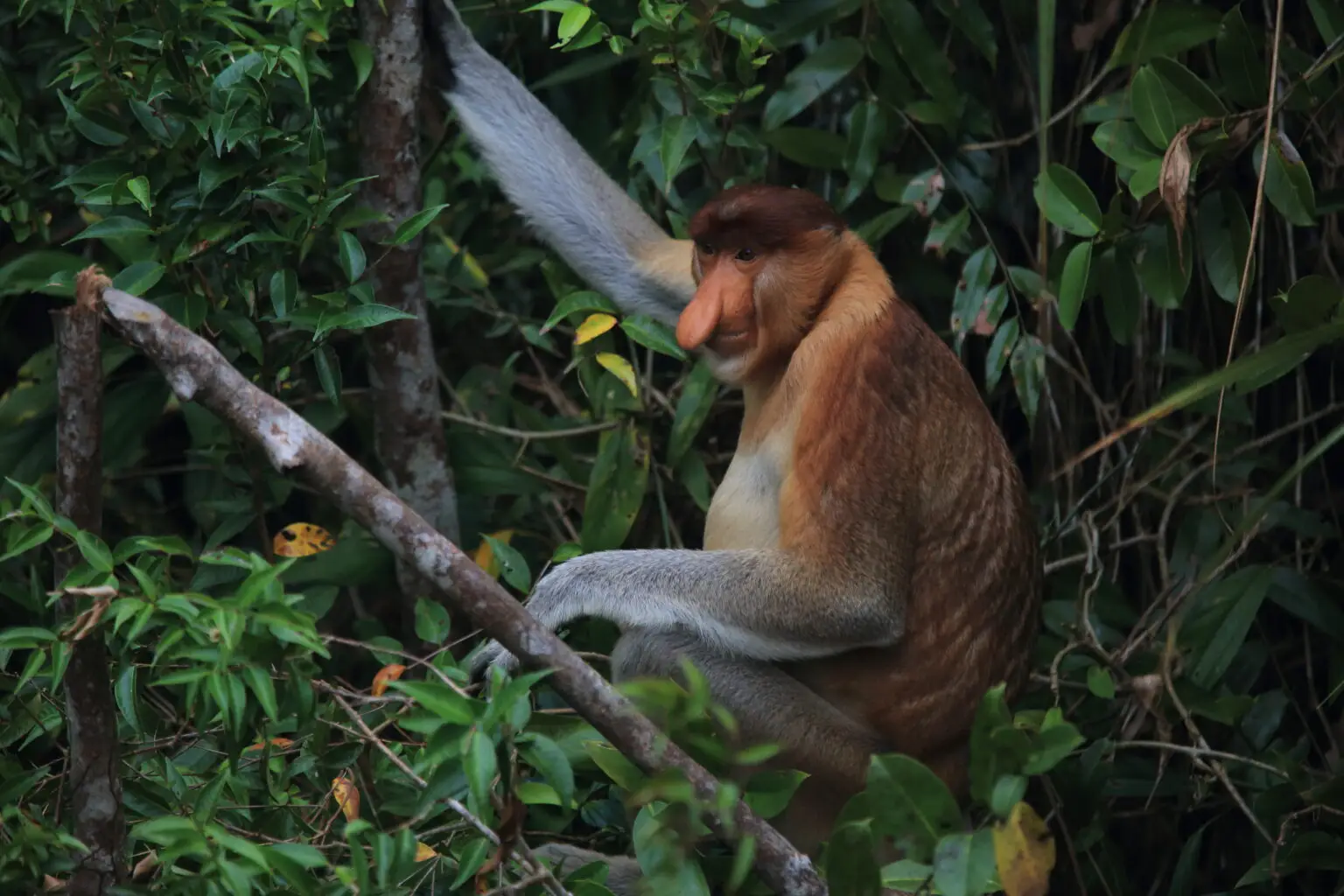
Wallacea is neither Asian nor Australian. It is a third world, isolated from both, where evolution has worked alone. Conservation International ranks it among the great biodiversity hotspots of the planet. Its rates of endemism are among the highest ever measured:
560 globally threatened species live in Wallacea — half of all the threatened species in Indonesia, on a tenth of its territory.
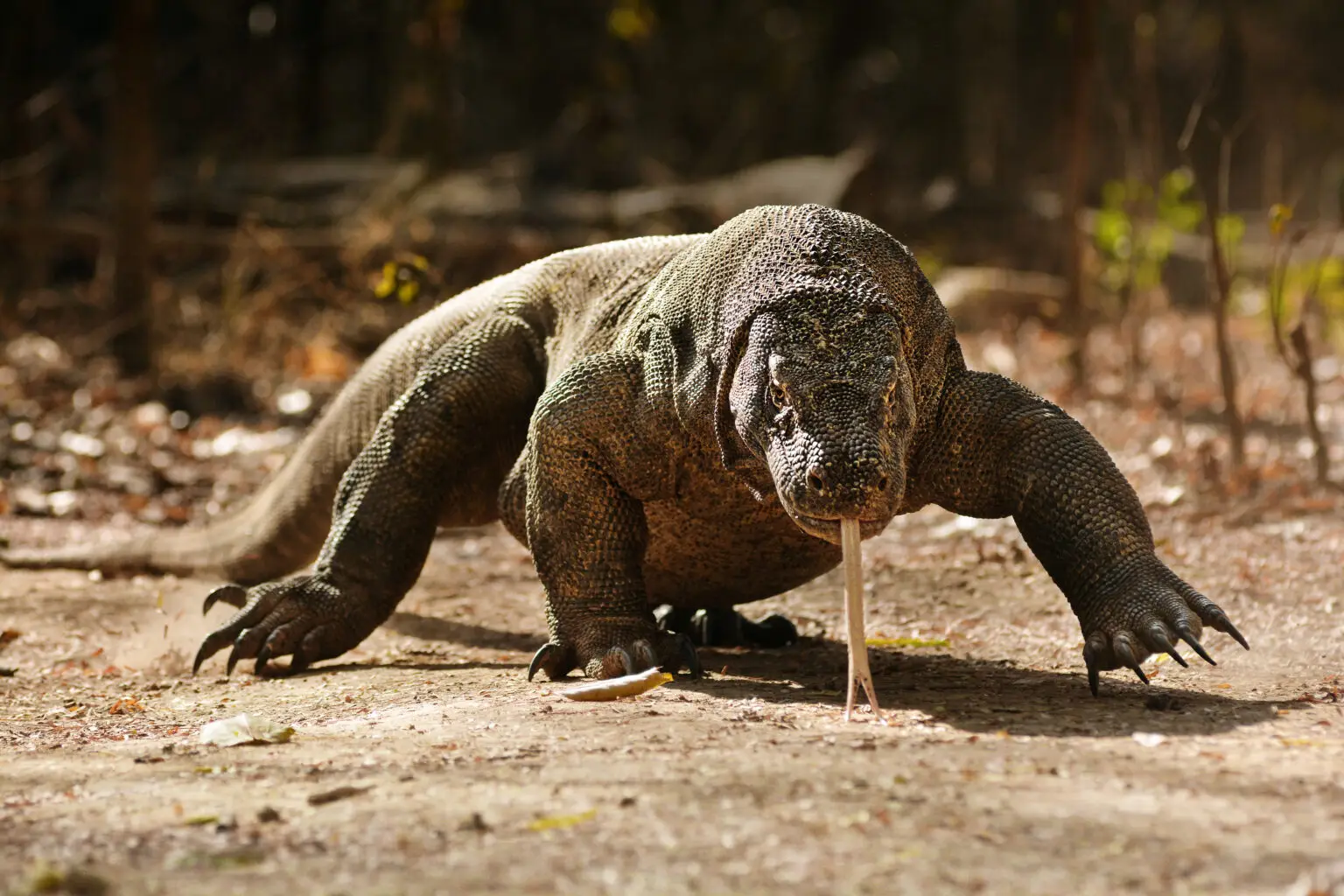
The Komodo dragon is the best-known illustration of this, and the most poorly told. It is readily presented as a prehistoric relic endemic to a handful of islets. The fossil record says otherwise: the species came from Australia and reached these islands some 900,000 years ago, when the crossing was still possible. It remained there, isolated by the rising waters. It is an Australian animal held prisoner in Wallacea — precisely what the Wallace Line predicts.
According to the latest park service survey, some 3,270 remain in the national park and 700 on the island of Flores. The species has been classified as endangered by the IUCN since September 2021, chiefly on account of rising sea levels — the same sea that once placed it beyond reach.
Beneath the surface
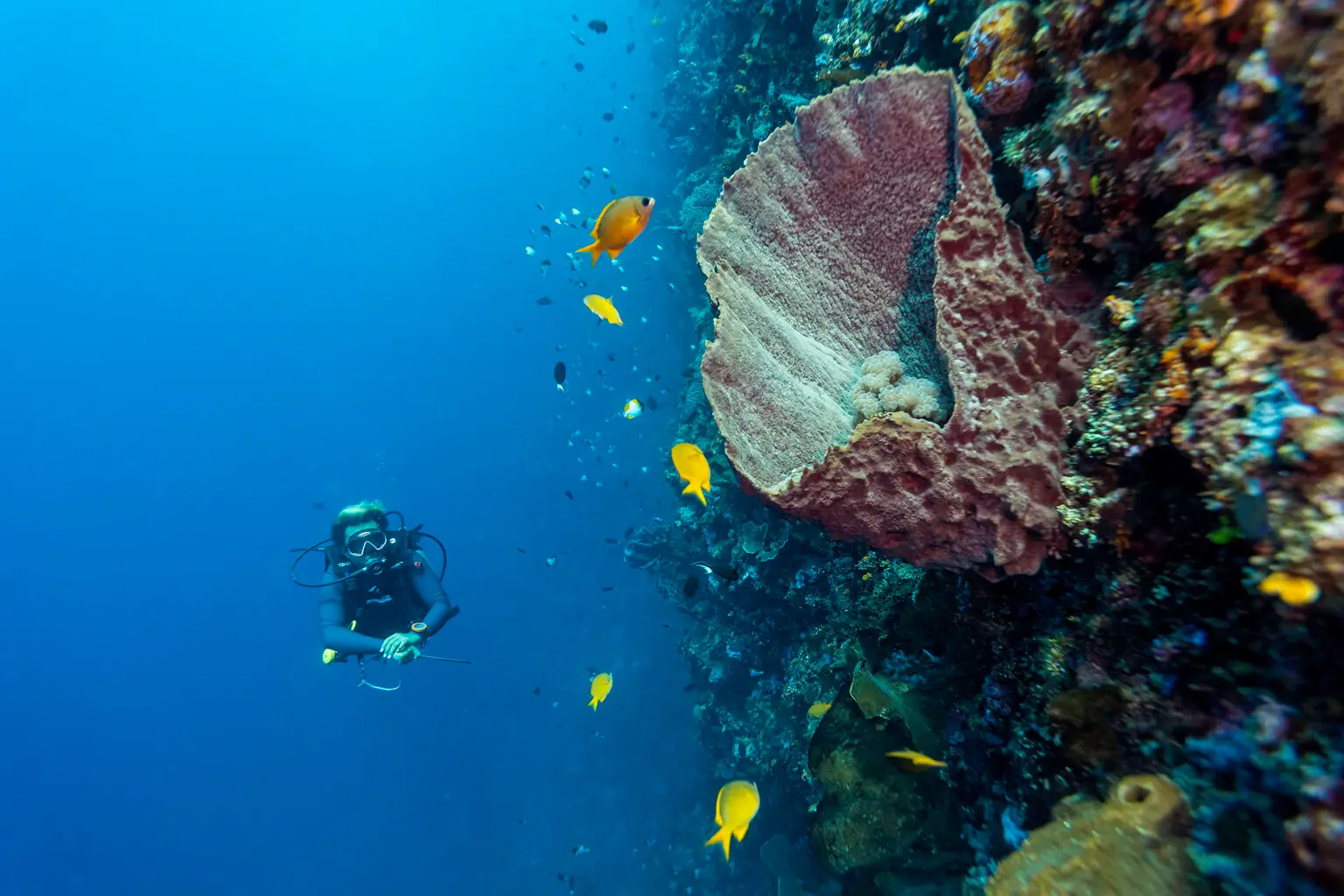
The Coral Triangle covers some six million square kilometres across six countries. It concentrates 76% of the world’s hard coral species — 605 species out of 798 known —, 2,228 species of reef fish, that is 37% of global diversity, and six of the seven species of marine turtle.
Indonesia alone holds roughly 16% of the world’s coral reefs. And within this triangle, one point stands above the rest.
Four principal islands — Waigeo, Batanta, Salawati, Misool — and some 1,500 islets, cays and shoals, off the north-western tip of New Guinea. Surveys by the managing authority give:
To give a sense of scale: the Great Barrier Reef, roughly seven times larger, holds about 450 hard coral species — a hundred fewer than the archipelago of Raja Ampat on its own. This is not one fine reef among others. It is the centre of gravity of global marine biodiversity — the place from which, on the prevailing hypothesis, corals recolonised the oceans after the last glaciations.
One particularity strikes experienced divers: a notable proportion of the manta rays here are melanistic, entirely black. And at the Magic Mountain site off Misool, both manta species — the reef manta and the oceanic — frequent the same cleaning station, something documented at only a handful of sites worldwide.
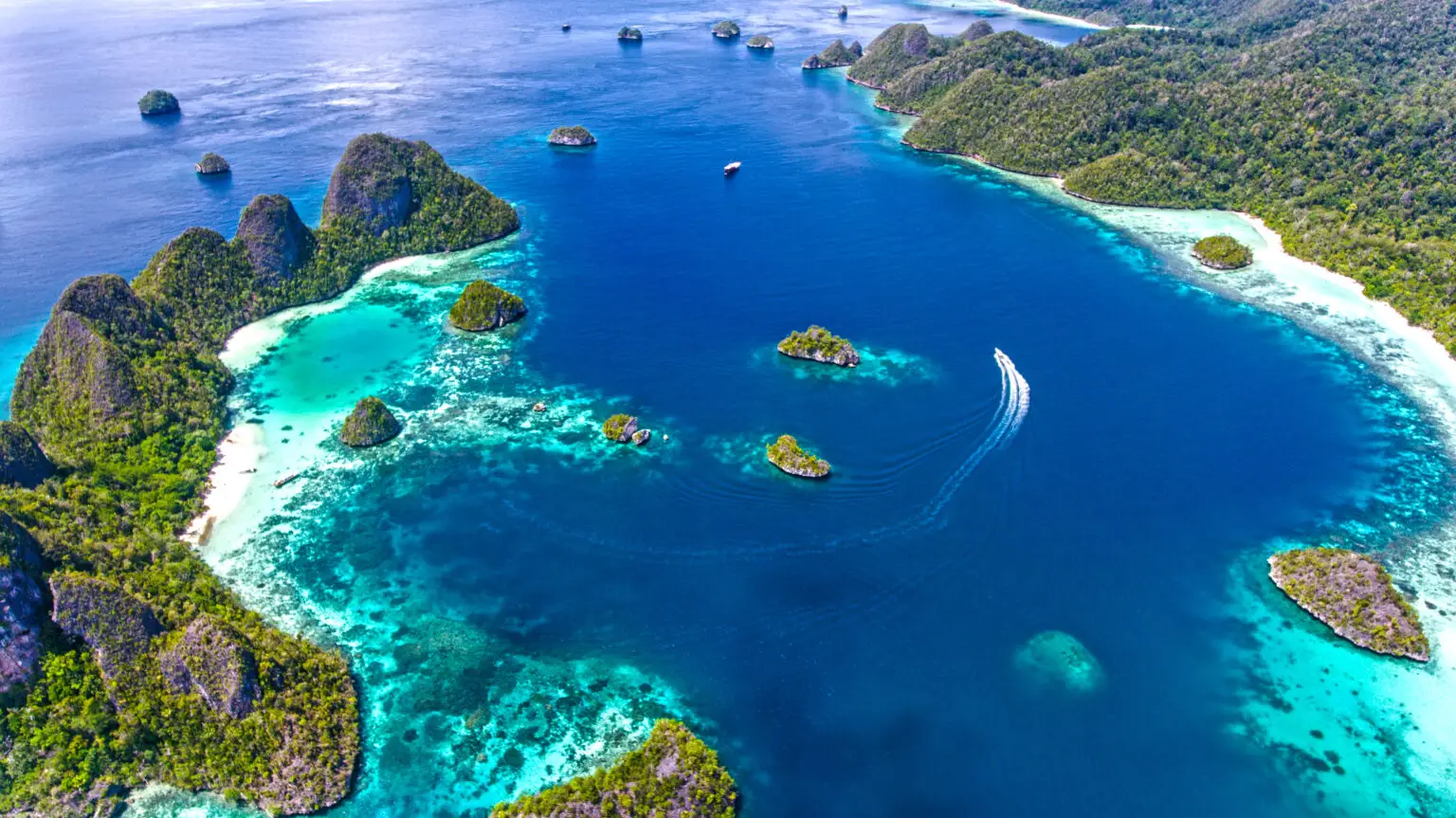
Indonesia has 57 national parks, seven of them marine in the strict sense, 20 UNESCO biosphere reserves — the first three, in 1977, being Tanjung Puting, Lore Lindu and Komodo — and 12 UNESCO Global Geoparks, Raja Ampat among them. Four natural sites are inscribed on the World Heritage List: Komodo and Ujung Kulon since 1991, Lorentz since 1999, and the tropical rainforests of Sumatra since 2004 — the last of these on the List of World Heritage in Danger since 2011.
Lorentz deserves a place apart: it is the only site in the world where one may follow, without interruption, a complete ecological gradient, from the tropical glaciers of the summits down to the coastal mangroves.
The park is not accessible by sea, and visiting it depends on complex conditions of access, which vary by season and by zone — whether by river, by airstrip or by expedition route.
Human density
The national language agency has validated and mapped 718 regional languages. Their distribution tells the whole story: 326 in Papua, 102 in West Papua, 72 in the eastern Lesser Sunda Islands, 62 in the Moluccas. Close to four languages in five are found in the eastern provinces — the very ones with neither roads nor hotels.
Indonesia ranks second in the world for the number of living languages, behind Papua New Guinea alone. The 2010 census further recorded more than 1,300 declared ethnic categories, consolidated into 633 groups by the national statisticians.
Nine volcanic islets lost in the middle of the Banda Sea. Until the nineteenth century, the world’s only source of nutmeg and mace. For two centuries, what these few hectares produced was worth more by weight than gold.
In 1621, the Dutch East India Company imposed its monopoly there by force. Historians estimate that a population of some fifteen thousand was reduced to a few thousand survivors — through fighting, famine, disease, slavery and deportation. Several historians describe the episode as genocide; the exact toll remains disputed.
It is often said that the Dutch “exchanged Manhattan for the island of Run”. It is a fine story, but it is untrue. The Treaty of Breda, signed on 31 July 1667, was a multilateral settlement founded on the principle of uti possidetis: each party keeps what it holds. The United Provinces retained Run and Surinam; England retained New Netherland and New York. There was no exchange. The precise formulation is that the Dutch accepted the loss of New Amsterdam in return for recognition of their sovereignty over Run. It is less romantic. It is what happened.
There remain today, on Banda Neira, Fort Belgica of 1611, the nutmeg plantations and the colonial houses. And in the water: the lava flow from the 1988 eruption, now overgrown, and a field of table corals of record growth — one of the most spectacular sites in Indonesia, and one of the rare places where the age of a reef can be dated precisely.
Some six million people across South Sulawesi. Shipowners and navigators, they held the trading routes of the archipelago long before the Europeans arrived, and reached as far as the Australian coast. They have been called the Vikings of Southeast Asia.
Shipwrights in the villages of Tana Beru, Bira and Batu Licin. Around 70% of the population of these settlements lives by boatbuilding. They shape their hulls without plans, by eye and by adze, according to a knowledge transmitted orally — inscribed on the Representative List of the Intangible Cultural Heritage of Humanity since December 2017. Worth noting, because the confusion is constant: it is not the Bugis who build the boats that bear their name, but the Konjo.
Some 242,000 people and around ten distinct languages. Traditionally sea nomads, they developed physiological adaptations (documented) to deep free-diving. For your complete information: full maritime nomadism is today very largely a thing of the past, under the effect of settlement policies. “The Bajau no longer live solely at sea.”
And at the far east, on the southern coast of Papua: the Asmat, whose carved poles, the bisj, now stand in the great collections of Oceanic art. Their villages on stilts, in a mangrove delta where navigation depends entirely on the tide, are reachable only a few weeks a year, and only by boat.
The practical question
Reaching Raja Ampat from Bali without a ship: a flight to Sorong via Jakarta or Makassar, often with an overnight stop, then a ferry or fast launch to Waisai, then local transfers to each site. The traveller spends the greater part of the journey in transit, and reaches only the few dozen sites within range of his “there and back”, or of a single base.
Reaching the Banda Islands: a flight to Ambon, then a domestic connection on an irregular schedule, or a fast ferry whose sailings depend on the state of the sea. For the Asmat, the Aru, the Tanimbar, the Forgotten Islands: there are quite simply no hotels.
The government has understood this. The directorate general of civil aviation has identified 39 sites for new airports, with the aim of raising the national network from 257 to 296 facilities, with priority given to border and peripheral areas. But no timetable has been announced, and the archipelagos discussed in this article will probably be served last.
A ship solves this problem as nothing else does: it carries the accommodation with the traveller, and it sails by night. An eight-hour passage is made while asleep. It is the only configuration in which a twelve-night itinerary genuinely includes twelve distinct sites rather than three.
The country’s most remarkable sites are now managed according to their carrying capacity, measured site by site. Komodo National Park offers the most fully developed example. Since April 2026, visitor numbers there have been capped at one thousand a day, with compulsory advance booking and allocation by site and by time slot:
| Site | Daily capacity |
|---|---|
| Loh Liang (Komodo island) | 250 people |
| Loh Buaya (Rinca) | 150 people |
| Pulau Padar | 60 people — and no entry between 11am and 3pm |
| Karang Makassar (manta rays) | 32 boats |
| Siaba Besar · Pulau Mawan | 20 boats each |
| Batu Bolong | 8 boats — and twenty minutes per dive group |
These thresholds rest on carrying-capacity studies conducted in 2018 and updated in 2022, which established a sustainable ceiling of the order of 366,000 to 379,000 visits a year. Actual attendance in 2025 was 429,509 visits, with peaks of 1,700 people a day in July. The cap is therefore not a measure of comfort: it is a correction.
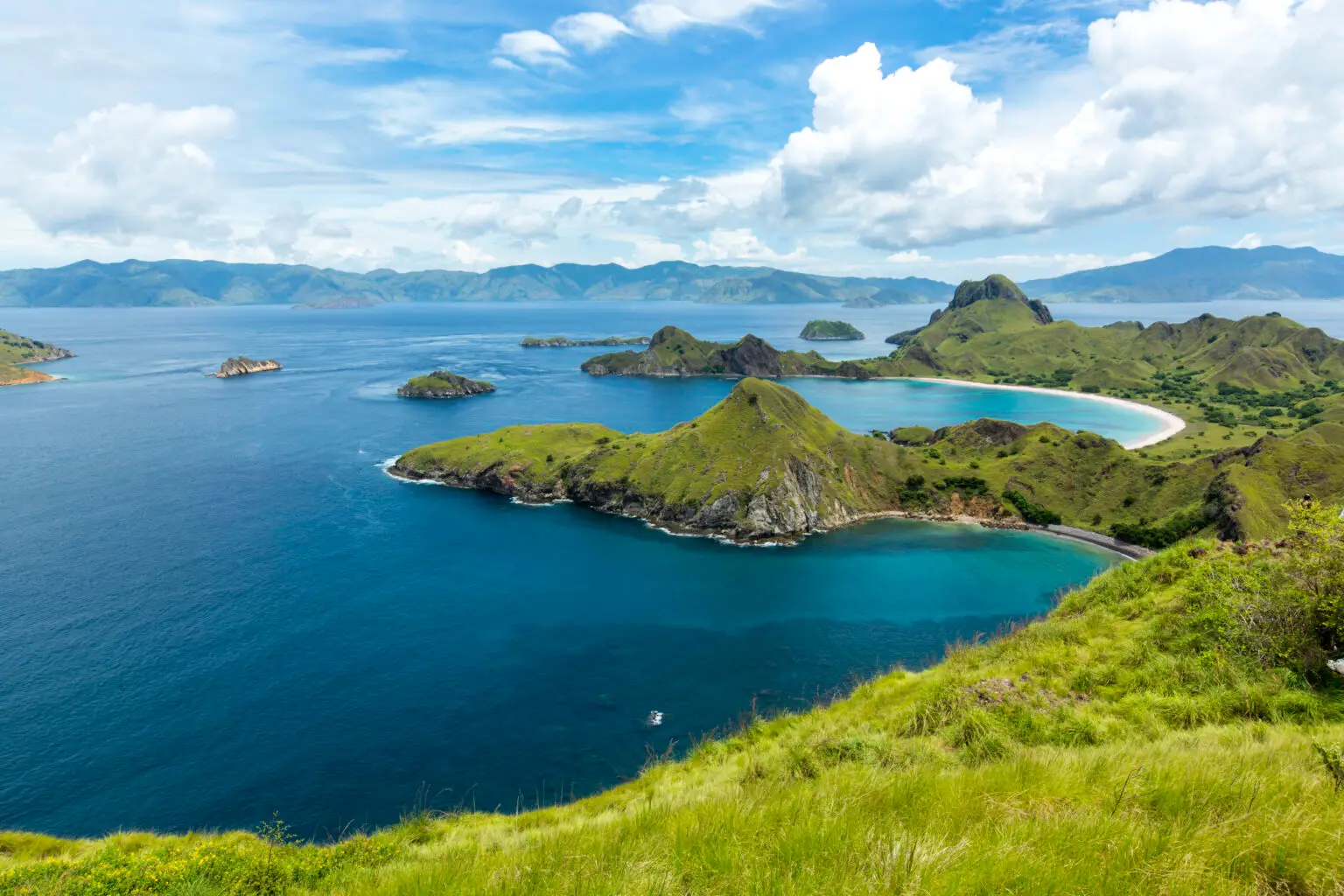
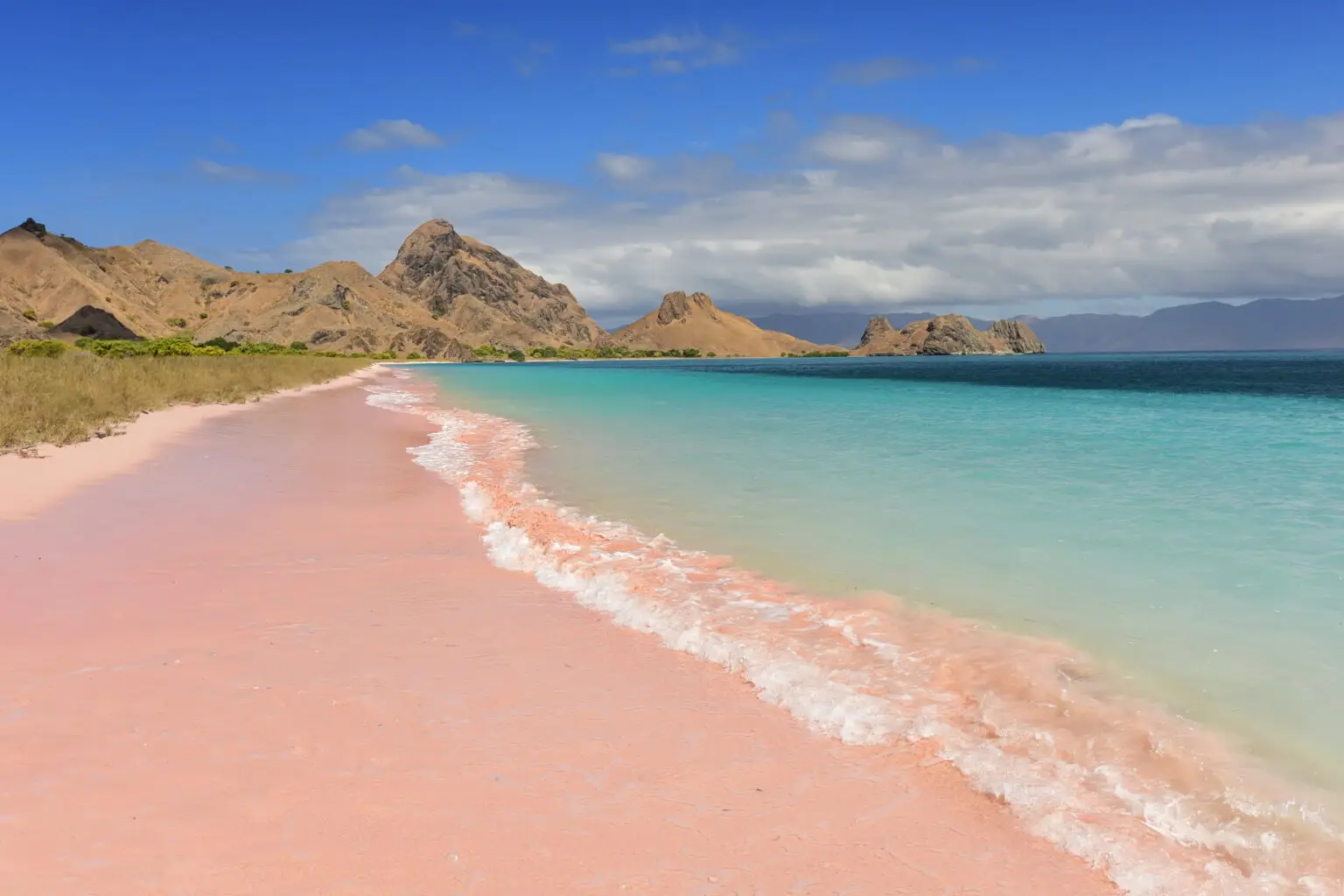
From June to August, the greater part of the regional fleet moves across to Komodo, the only zone then in full season. The result: dozens of boats on the same anchorages, at the same hours, with the same time slots. At the very same moment Raja Ampat is all but empty, not a vessel in sight — but it is out of season.
Komodo in August is, for anyone seeking quiet, the worst possible trade-off. The European high season coincides exactly with the island’s peak attendance. September–October and April–May offer equivalent conditions, often better ones, because visitor numbers fall away.
The decisive point
The Indonesian archipelago is governed by the Austral-Asian monsoon regime, which reverses twice a year. From December to March, a north-westerly flow brings the rainy season to Java, Bali and the Lesser Sunda Islands. From May to September, the Australian continental anticyclone drives a south-easterly flow, dry and above all persistent — and it is its persistence, not its intensity, that matters for sailing. Between the two, the inter-monsoons of April–May and September–November bring light winds and a flat sea.
But the archipelago extends on either side of the equator. Raja Ampat, in a Papuan equatorial regime, sees its maximum rainfall and wind between June and August. Komodo, at 8°30' south, is then in full dry season.
Beyond that, three further factors must be taken into account, rarely explained:
The longer the fetch, the more time the waves have to form, to build and to cross one another.
In the Banda Sea this produces a short, choppy, confused sea, with waves of two to three metres that may last for weeks.
It is for this reason that the Banda Sea is closed from June to August: not because of the rain, but because of the sea itself, rendered too rough by this exceptional fetch.
| Region | Optimal window | To avoid |
|---|---|---|
| Raja Ampat | Mid-October → mid-April heart of it November–March | July–August |
| Misool | November–April peak quality in March–April | June–August |
| Komodo north and centre | June–September | January–February |
| Komodo south | April–May and September–November | July–August swell, water at 20 °C |
| Banda Sea | September–November heart of it: October | June–August and December–February |
| Forgotten Islands, Alor | October–November, and March–April | June–August and December–February |
| Triton Bay / Kaimana | November–April | May–September (closed) |
| Cenderawasih Bay | June–September a constraint of supply, not of weather | — |
| Wakatobi | All year round average visibility ~35 m | — |
| Lembeh, Bunaken | March–June and September–November Lembeh workable all year | December–February (Bunaken) |
| Derawan, Maratua | March–October | January |
| Tanjung Puting (orangutans) | June–September | November–April |
| Saleh Bay (whale sharks) | April–November | January–March |
| Bali, Nusa Penida | May–October sunfish August–September | January–February |
| Asmat, Aru | September–December | June–August and January–March |
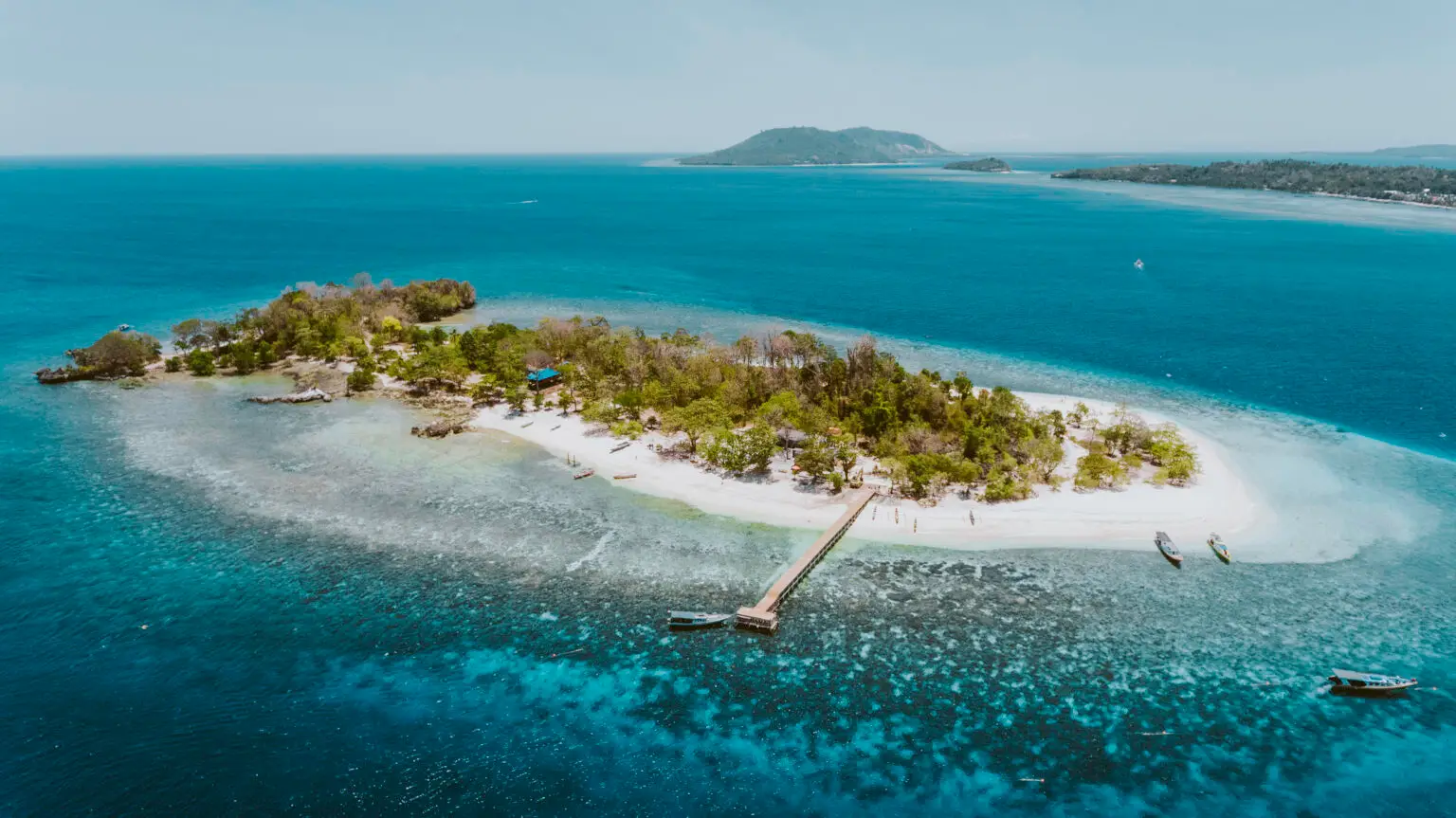
Western Papua. Raja Ampat at its absolute height: a flat sea, manta rays at their peak, thirty metres of visibility. Triton Bay open. Southern Komodo for the mantas. The rest of the country is in monsoon.
The most versatile of the year. Misool is still superb, Komodo opens and its southern sector is excellent, Sulawesi and Kalimantan are in place. It is the only moment when almost everything works at once.
Western Nusa Tenggara, Sulawesi, interior Kalimantan. Papua is closed. For a traveller who can only leave in July or August, the right answer is not Raja Ampat but northern Komodo, Tanjung Puting and Java — or Lembeh and Bunaken for diving.
The great eastern window: the Banda Sea, the Forgotten Islands, Alor, the Asmat — and the reopening of Raja Ampat. October is the finest month of the Indonesian year, and it is also the one that is booked earliest.
The consequence is mechanical, and it is the true constraint of this dossier:
The usual method must therefore be reversed: the project is built around the availability of the ship, before the dates are fixed — and an alternative of equivalent season is provided for from the outset.
What is actually on offer
Silversea — whom we admire and have known for many years — Regent Seven Seas and Oceania rank among the finest houses in the market, and we recommend them regularly. On Indonesia, however, one must look closely at what their itineraries actually do.
In the programmes published for 2026 to 2028, Indonesia appears with these three companies only within inter-regional sailings: Singapore or Bangkok to Bali, Bali to Sydney or Darwin, Hong Kong to Bali, or as part of world voyages. The Indonesian ports of call are Bali, Komodo, Lombok, Semarang, Surabaya, Jakarta, Kupang, Sumba, and — for Silversea — a few additional points in Sulawesi and at Alor. In none of these schedules did we find a port of call at Sorong or in Raja Ampat.
Viking follows the same logic. Its Indonesian itineraries — Komodo & the Australian Coast departing from Benoa, Bangkok, Bali & Beyond, Southeast Asia — are scheduled through 2029, but they are seasonal links between Southeast Asia and Australasia, with Bali, Lombok and Komodo as their only Indonesian ports. The company has, moreover, served Benoa since at least 2020.
These are, overwhelmingly, repositioning voyages: the ship crosses the archipelago to reach another season, another region, and calls in along the way. Certain sequences are indeed dense — a seven-night Darwin–Bali may line up five consecutive Indonesian ports, and a twenty-one-night Manila–Darwin aboard Silver Cloud serves Tana Toraja with an overnight alongside, Komodo, Lamalera and Alor, which is particularly remarkable. But the logic remains that of transit, and the capacities — 254 passengers for Silver Cloud, 750 for Seven Seas Explorer, 670 to 1,250 depending on the Oceania ships — do not allow access to the capped-capacity zones described above.
This is not a shortcoming. It is a position — a repositioning. These ships offer a level of comfort, service and cuisine that the expedition segment does not reach. But they do not lead where, in our view, one ought to go, and it is better to know that before you sail.
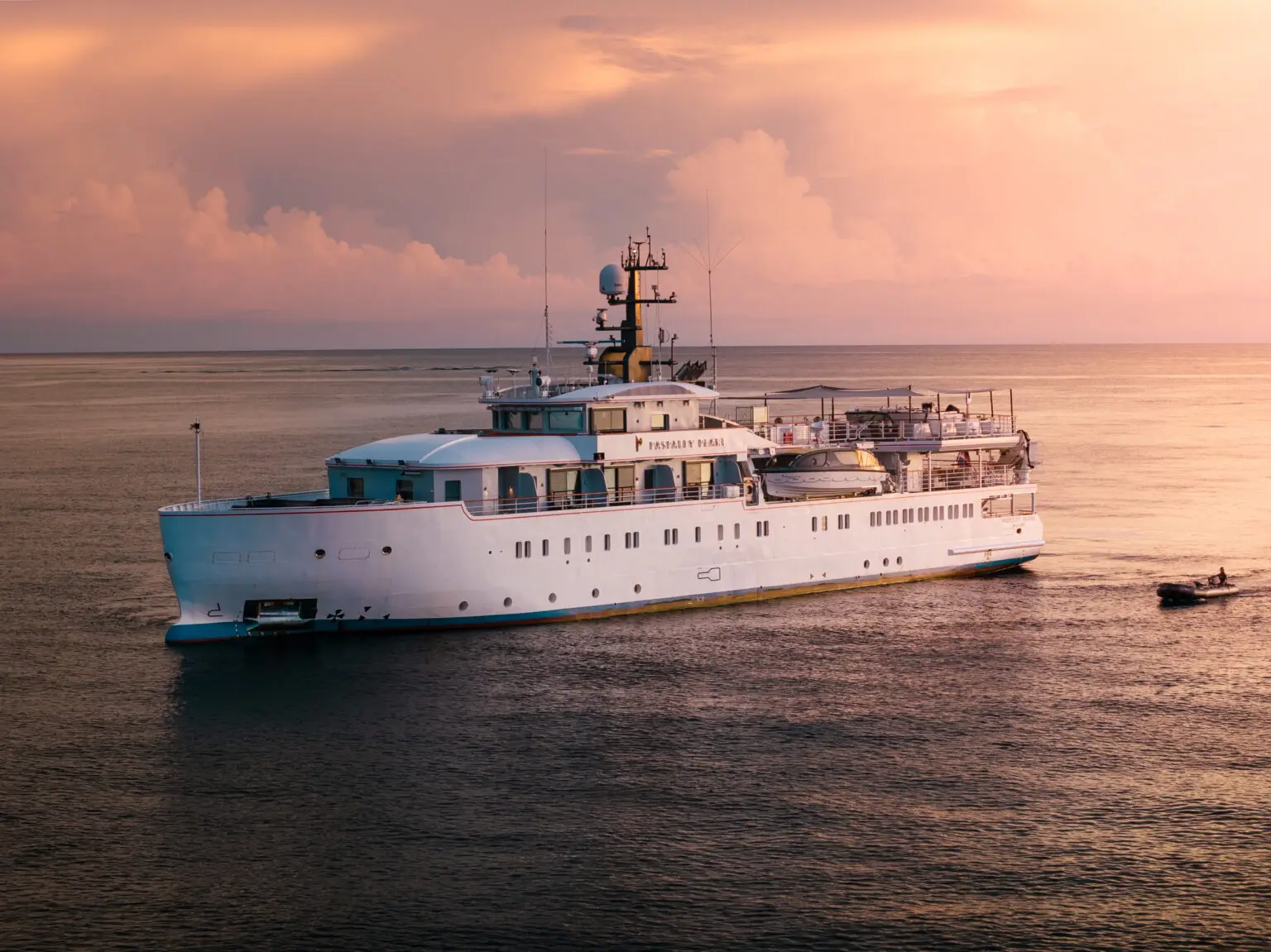
An Australian company launched in 2025, backed by the Paspaley family — the world's leading producer of South Sea cultured pearls, a position Christie's notes in its Magnificent Jewels catalogues. It is led by Sarina Bratton, founder of Orion Expedition Cruises, whose expertise the company explicitly continues, and its expeditions by Mick Fogg, also from Orion, who has known eastern Indonesia and Papua for many years. A company born in 2025, then — but not a beginner.
The Paspaley Pearl is a 50-metre, 994-tonne expedition yacht, delivered in 2021 as the Island Escape by the Norwegian builder VARD, part of the Fincantieri group — the yard behind Ponant's Le Commandant Charcot and the Viking Octantis and Polaris — and entirely reconfigured in 2024–2025. 30 guests, 15 cabins of which seven have balconies, 21 crew including four naturalist guides — a ratio of one crew member to 1.4 guests. Two purpose-built expedition tenders made in Cairns and two Zodiac Mark V.
Two dining spaces: the Ocean Restaurant indoors, thirty-two covers, for dinner; the Horizon Grill & Lounge in the open air, thirty-two places, for breakfast and lunch. Executive chef: the Australian Alex Bentley, formerly of Raes on Wategos. All-inclusive pricing: shore excursions, premium beverages, port taxes, gratuities and Starlink.
One technical detail that matters more than it sounds: the ship has dynamic positioning, allowing it to hold station without dropping anchor. Over coral, the difference is considerable — and increasingly monitored locally.
In Indonesia, three programmes, all set between December and March — that is, inside the right window:
| Itinerary | Length · ports | Departures |
|---|---|---|
| Raja Ampat Nature’s Richest Realm |
12 nights Dili round trip Kei · KitiKiti (Mommon) · Raja Ampat, 5 days · Banda Neira · Ambon |
16 February 2027 4, 16 and 28 December 2027 |
| Borneo & Beyond Indonesia’s Big Three – Orangutans, Dragons & Whale Sharks |
11 nights Bali round trip Sumenep · Camp Leakey and Tanjung Puting · Mount Bromo · Saleh Bay · Komodo · Pink Beach · Badas |
12 and 23 January 2027 |
| East Indonesia From Timor Leste to Bali |
9 nights Dili round trip Maumere · Seventeen Islands Marine Park · Komodo · Sumba · Savu · Kupang |
12 December 2026 |
Ponant is among the few large companies to conduct genuine Indonesian programmes rather than transits. Le Soléal, 264 passengers, keeps a full season there, classified as “Expeditions”, with naturalist guides, Zodiac landings and supervised diving for qualified divers.
| Itinerary 2026–2027 | Route | Dates |
|---|---|---|
| Raja Ampat and the Spice Islands | Darwin return · 11 nights | 17–28 September 2026 |
| Island treasures of Indonesia and East Timor | Darwin → Benoa · 14 nights | 9–23 November 2026 |
| Wild lands of Indonesia | Benoa return · 10 nights | 24 November – 4 December 2026 |
| Tropical odyssey between Indonesia and north-east Australia | Benoa → Cairns · 15 nights | 4–19 December 2026 |
| Indonesian tropical odyssey | Benoa → Darwin · 13 nights | 15–28 June 2027 |
The flagship programme is the first: four full days in the Raja Ampat archipelago, preceded by Banda Neira and the memory of the nutmeg trade, followed by the Kitikiti waterfall in West Papua and the Kei Islands. “Wild lands of Indonesia” takes the other course, entirely to the south: Sumba, the Seventeen Islands marine park, Komodo, Saleh Bay and Satonda, within the SAMOTA biosphere reserve. Several cabin categories are already sold out on both these departures.
A 60-metre explorer yacht, a former British Royal Navy vessel entirely redesigned, 30 guests in 15 suites. She is the only direct competitor to the Paspaley Pearl in this segment, and she covers a wider range of itineraries: northern and southern Raja Ampat, Komodo, the Spice Islands, and as far as the Asmat villages of the southern Papuan coast. Our Virtuoso affiliation gives us access to her departures, and she is also offered for full private charter, as is the Paspaley Pearl.
Winner of the Virtuoso award for Best Expedition Cruise Experience, presented at Virtuoso Travel Week in August 2026 in Las Vegas. Lindblad announced at the end of 2025 the charter of the Aqua Blu for its own Indonesian programmes — which gives, aboard the same hull, two different ways of travelling. Two itineraries are open from October and November 2026: “Indonesia’s Coral Gardens and Komodo Dragons”, fifteen days from Bali covering Komodo, Takabonerate, Alor, Wetar, the Barat Daya islands and Banda; and “Indonesia’s Spice Islands and Raja Ampat”. What Lindblad brings of its own is the scientific framing — naturalists, a National Geographic photographer aboard, supervised diving — within a tradition of exploration that reaches back to 1966.
An Australian expedition company — premium rather than luxury, and unapologetic about it. Comfort on board is simpler and more functional than with Pearl or Aqua; the experience is markedly more immersive. Two ships: the True North, 36 guests and 22 crew, and the True North II, around twenty guests. Six tenders, and a helicopter on board offered as an optional activity.
The Papuan programme is dense — Raja Ampat north, south, east and west, several itineraries in Papua New Guinea — and it includes above all Cenderawasih Bay, one of the few year-round resident whale shark aggregations in the world.
The bay is not an exclusivity: a dozen or so dive vessels serve it from Nabire or Manokwari, and both Aurora Expeditions and Heritage Expeditions call there within longer itineraries. What True North alone does is run it out of Darwin, with charter flights Darwin-Biak included in the fare, over seven nights devoted entirely to the bay, in October — with no transit through Indonesian hubs. That is where the difference lies, and it is logistical.
We reproduce no brochure here. The capacities, dates and technical specifications quoted have been verified at source with the companies concerned; fares move, and are deliberately absent from this dossier.
Another route
Indonesia is open to foreign private yachts, and has been, for some time now, more straightforwardly so than is commonly believed. The procedures have been moved online: a vessel declaration filed electronically with Indonesian customs now serves as a cruising permit, valid for three years across the entire territory.
The difficulty, then, is not the principal authorisation. It lies elsewhere:
We are able to accompany these formalities: assembling the file, coordinating with the shipping agent, obtaining access to parks and reserves, and aligning the itinerary with the seasonal windows described above. It is work of anticipation and coordination — the very work which, poorly done, turns a season into a wait at anchor.
A useful reminder: a few areas are intermittently inaccessible for reasons that appear in no official text. Wayag, in northern Raja Ampat, has been so since July 2025 following a local dispute, with no reopening date announced to date. This is the kind of information that is not found in brochures and that is verified month by month with operators on the ground, or with the authorities to which we have access.
In closing
Nothing that precedes is spectacular. It is work of documentation, judgement and memory. It comes down to five points.
There is not one Indonesian season; there are four, and they do not overlap. The calendar is not a detail of execution: it is the first decision of the voyage, and it governs all the others.
A Raja Ampat departure in July exists and is sold. It sells a diminished season. A Banda Sea departure in July exists too. It sells a rough passage. Our part is not to find a ship on the date requested — it is to say when the date is wrong, and why.
A ship of 250 passengers and a ship of 30 do not make the same voyage less well or better: they do not make the same voyage. One serves large ports capable of absorbing its flow. The other goes where the carrying capacity is sixty people a day. It is the only comparison that matters.
Twelve to eighteen months for Raja Ampat in high season. Twelve to twenty-four months for a Banda Sea departure in October. On certain destinations, the question is not the price but whether a departure exists.
Conditions of access shift, windows move by three to six weeks according to climatic cycles, areas close without any official text. This dossier carries a date, and it will carry another in six months.
A Travel Family Office. BG ULTIMATE is the travel division of BG FINANCES, a Paris multi-family office established in 2003. What we bring to a travel project comes from that: to anticipate, to weigh, to document, to keep confidence, and to know when to say no, to know the ships and the seasons that will not do.
We receive Monday to Saturday, by appointment only.

The Ultimate Experience, our Signature

